The Dance Floor Was Always the Gallery: How Diaspora Movers Are Crashing Fine Art's Biggest Stages
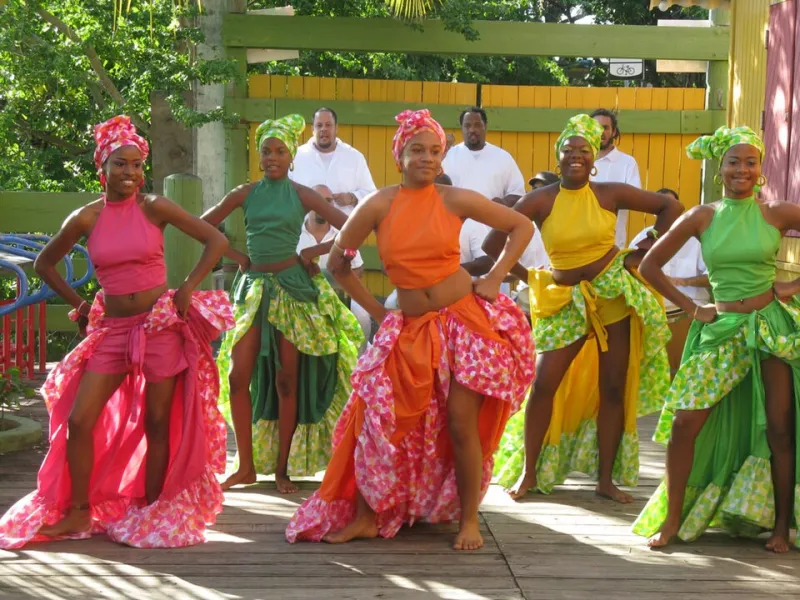
Photo: Spreadofknowledge, CC BY-SA 4.0, via Wikimedia Commons
Let's get something straight before we go any further: African dance has never needed the fine art world's validation. It predates the gallery system by several thousand years. It carries cosmologies, histories, and spiritual frameworks that no white-cube installation could fully contain. So when we talk about diaspora dancers "entering" the world of high art, let's be clear about the direction of the cultural debt. The art world is entering theirs.
That said, something genuinely exciting is happening at this intersection in 2024. A wave of Black and African diaspora choreographers and movement artists are operating simultaneously in the viral economy of TikTok and the rarefied air of museum installations and theatrical stages — and in doing so, they're forcing a long-overdue reckoning with what gets called "art" and what gets called "entertainment."
From For You Page to the Main Stage
It usually starts with a video. A dancer in their living room, a parking lot, or a park breaks into a sequence rooted in something ancestral — Afrobeats footwork, Amapiano groove, the rolling shoulders of Azonto, the grounded stomp of gumboot — and it spreads. Millions of views. Thousands of recreations. The algorithm doesn't care about lineage or cultural context; it just knows that people can't stop watching.
But the artists behind these moments? They care deeply about both.
Choreographer and movement artist Nia Selase, based in Brooklyn, went viral twice in 2023 — once for a TikTok breakdown of traditional Ghanaian adowa movement, and once for a short film installation she performed as part of a group show at a Brooklyn arts space. Both pieces were rooted in the same source material. The difference, she says, was the frame.
"On TikTok, people see the joy and they want to copy it," she told us. "In the gallery, people slow down and ask where it comes from. I need both of those conversations to happen. The viral moment brings people in. The installation makes them stay."
This dual existence — viral and institutional, accessible and archival — is becoming a defining characteristic of diaspora movement artists working right now. And it's not accidental. It's a deliberate strategy.
What the Art World Still Gets Wrong
Here's where I have to be honest, because this is an opinion piece and The Afropole doesn't do false balance: the fine art world's embrace of African diaspora dance has been, at best, inconsistent, and at worst, extractive.
Institutions love the aesthetics. They love the visual spectacle of bodies moving through gallery spaces, the way African-rooted movement photography sells out print editions, the grant applications that get funded when they include words like "decolonizing performance" and "embodied heritage." What they're slower to do is compensate dancers at the rate of sculptors, offer the same residency terms given to visual artists, or genuinely relinquish curatorial control over how the work is contextualized.
Choreographer Marcus Efe, who has staged work at venues from Chicago's MCA to smaller Black-run arts spaces in Atlanta, put it plainly: "Galleries want the body. They're less interested in the person inside it. I've had institutions describe my work in their press materials in ways I didn't recognize. Like they needed to translate me for their audience. I don't need translating."
This tension — between institutional access and institutional integrity — is something every diaspora movement artist navigating this space has to reckon with. The ones doing it most effectively are the ones who've decided that the terms of the conversation are not negotiable.
Redefining "African Dance" in Real Time
One of the most powerful things this generation of artists is doing is refusing the monolith. "African dance" is not a genre. It is not a single aesthetic. It is not the thing you saw in a National Geographic documentary or a Beyoncé visual album, as magnificent as both of those things might be.
It is Pantsula from Johannesburg townships. It is the precise, exacting geometry of Ivorian zaouli. It is the improvisational call-and-response of New Orleans second-line, which carries West African ring-shout DNA in its bones. It is Afrohouse in a Berlin club at 3 a.m. It is a grandmother teaching her grandchild in a Lagos compound on a Sunday afternoon.
Diaspora movement artists working in 2024 are holding all of that complexity simultaneously, and they're doing it in front of audiences who may have never considered any of it before.
New York-based dancer and choreographer Amara Diallo has built an entire performance practice around what she calls "the archive of the body" — the idea that Black and African bodies carry movement memory that has survived the Middle Passage, colonization, and cultural erasure. Her recent piece, staged at a Harlem performance space, began with a TikTok-style breakdown of a viral Afrobeats dance trend and ended forty-five minutes later in something that felt closer to ceremony than choreography.
"I want people to walk in thinking they're going to a dance show and walk out thinking about their ancestors," she said. "That's not a trick. That's just what this movement has always been for."
The Algorithm as Unexpected Ally
For all the legitimate critiques of social media's relationship to Black culture — the appropriation cycles, the credit erasure, the way platforms profit from Black creativity without protecting Black creators — TikTok and Instagram have done something genuinely valuable for diaspora movement artists: they've created a direct line between the artist and a global audience that bypasses institutional gatekeepers entirely.
An artist in Atlanta can teach the history of South African pantsula footwork to three million people in a week. A choreographer in Houston can document their creative process in real time, building an audience that follows them from the phone screen to the theater seat. The audience development that used to take a decade of grant applications and residencies can now happen organically, on the artist's own terms.
That doesn't mean the institutions don't matter anymore. It means the artists walk into those institutions with leverage they've never had before.
The Gallery Was Always Late
If you've ever been in a room where African diaspora dance is happening at full power — a Afrobeats concert, a West African dance class, a Carnival celebration, a church service where the Spirit moves through the congregation's feet — you already know that no gallery wall has ever contained that energy. The fine art world didn't invent the idea that movement is art. Black and African communities have known that for as long as there have been Black and African communities.
What's happening now is not an elevation of African dance into art. It's a correction of a long-standing misclassification. These choreographers and movement artists aren't crossing over into high art. They're pulling high art toward something truer, something older, something that was always worth watching.
The gallery is finally catching up. And the dancers? They've been ready.