Drop the Bass, Hold the Space: How Diaspora DJs Are Turning the Club Into a Sanctuary

Walk into one of these events and you'll notice something feels different before the first track even drops. Maybe it's the way the host greets you at the door—not with a clipboard and a hard stare, but with eye contact and a real smile. Maybe it's the altar tucked into the corner, draped in kente and cowrie shells. Maybe it's just the air itself, carrying something heavier and more honest than hype.
This is not your average Friday night. And that's entirely the point.
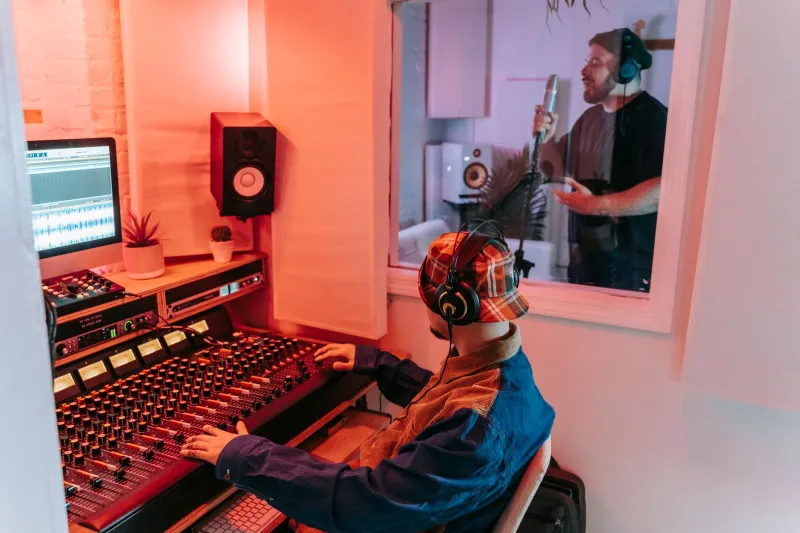
Across cities like Atlanta, Chicago, New York, and Los Angeles, a growing wave of Black and African diaspora DJs is quietly dismantling the commercial nightlife playbook—and rebuilding it around something far more intentional. They're calling it different things: healing frequencies, ancestral sound work, community curation. But the core idea is the same. The dancefloor, they argue, was always a sacred space. It just got hijacked somewhere along the way.
The Dancefloor as Ancestral Technology
There's a reason movement and music have always been central to African spiritual practice. From the ring shout traditions of enslaved Black Americans to the ngoma ceremonies of East Africa, communal dancing to rhythmic sound has historically served as a form of healing, prayer, and collective release. It wasn't entertainment—it was medicine.
Somewhere in the journey through colonization, displacement, and the commercialization of Black culture, that original meaning got diluted. Nightlife became a product. The dancefloor became a revenue stream. And for many diaspora folks, the club started to feel less like home and more like a space designed to extract money while barely tolerating their presence.
The DJs driving this new movement are consciously reaching back past all of that. They're studying the ceremonial roots of the music they play—Afrobeats, amapiano, soca, house, Afro-fusion—and they're reinfusing their sets with that original intention. A DJ set, in this framework, isn't a performance. It's a facilitation.
"I think of myself less as a DJ and more as a sonic architect," says one Brooklyn-based selector who runs a monthly gathering centered on West African rhythms and breathwork. "My job is to build a container where people can actually feel something real."
Radical Door Policies and the Politics of Who Gets In
If the music is the medicine, the door policy is the prescription pad. And these collectives are rewriting it entirely.
Traditional nightlife gatekeeping has always carried racial and economic bias—velvet ropes that mysteriously tighten when certain faces show up, dress codes that read as coded exclusion, bottle-service minimums that price out working-class Black communities from spaces built on their own culture. The healing nightlife movement is calling that out directly.
Many of these events operate on sliding-scale admission, with explicit commitments to accessibility for community members who can't pay full price. Some nights are explicitly women-forward or queer-centered, creating environments where diaspora folks who are used to scanning a room for safety can finally just... exhale. Others require attendees to agree to a community covenant before they enter—a set of values around consent, respect, and collective care.
It sounds counterintuitive in an industry obsessed with capacity and revenue, but organizers say the energy it creates is worth more than any VIP section. "When people feel genuinely safe, they open up in a way you can't manufacture," explains a Chicago-based event producer who hosts monthly Afro-house gatherings on the South Side. "The dancing gets deeper. The connections get realer. The whole room shifts."
Curation as Spiritual Practice
Ask these DJs how they build a set and they won't just talk about BPMs and transitions. They'll talk about intention, energy arcs, and what the room needs to move through emotionally over the course of a night.
Many draw on practices borrowed from sound healing traditions—layering frequencies that are said to promote specific emotional states, spacing out high-energy peaks with slower, more meditative passages, and reading the crowd not just for what makes them jump but for what makes them breathe. Some open their nights with a moment of stillness or spoken word. Others close with a circle, a prayer, or a collective acknowledgment of the ancestors whose rhythms they've been channeling all night.
The amapiano wave has been particularly fertile ground for this philosophy. With its hypnotic log drum patterns and spacious, soulful arrangements, the South African genre lends itself to a kind of sonic meditation that's very different from high-tempo club music. DJs who specialize in it often describe playing amapiano sets as something close to leading a guided experience.
Afrobeats, too, is being reclaimed in this context—stripped of its increasingly corporate pop packaging and reconnected to the Yoruba, Igbo, and Ghanaian sonic traditions that gave it its original power. When played with that awareness, even a familiar banger can land differently.
Building Infrastructure for the Movement
What's remarkable about this shift is that it's not just vibes—it's also business. These collectives are building real infrastructure: record labels, event production companies, wellness-music hybrid spaces, and artist development pipelines that center diaspora creators who share the philosophy.
In cities with significant African diaspora populations, some of these events have grown from intimate 50-person gatherings in borrowed lofts to 500-person nights in proper venues—all without sacrificing the intentional culture that made them special in the first place. The trick, organizers say, is scaling the community, not just the capacity.
Social media has helped spread the word without diluting the message. Short clips of the altar setups, the circle moments, the full-room amapiano swells have resonated deeply with diaspora audiences who recognize what they're seeing even if they've never had a word for it. The comments sections read like homecoming testimonials.
There's also growing interest from wellness brands, mental health organizations, and cultural institutions who see what these DJs are doing as a legitimate intervention in community mental health—particularly for diaspora communities who face documented barriers to traditional therapy.
The Frequency the Ancestors Left For Us
None of this is entirely new, of course. Black nightlife has always had a spiritual undercurrent, from the church-to-club pipeline of gospel and soul to the explicitly transcendent culture of Chicago house and Detroit techno. What's new is the explicitness of the intention—the refusal to let that dimension stay implicit or get buried under commercial pressure.
These DJs are naming what they're doing. They're building language around it, teaching it, passing it on. And in doing so, they're offering diaspora communities something the mainstream wellness industry has mostly failed to provide: healing that looks, sounds, and feels like us.
The club was always a sanctuary. These selectors are just restoring it to its original purpose—one track, one room, one collective exhale at a time.