The Hands Behind the Hit: How African Diaspora Producers Are Quietly Running the Music Industry
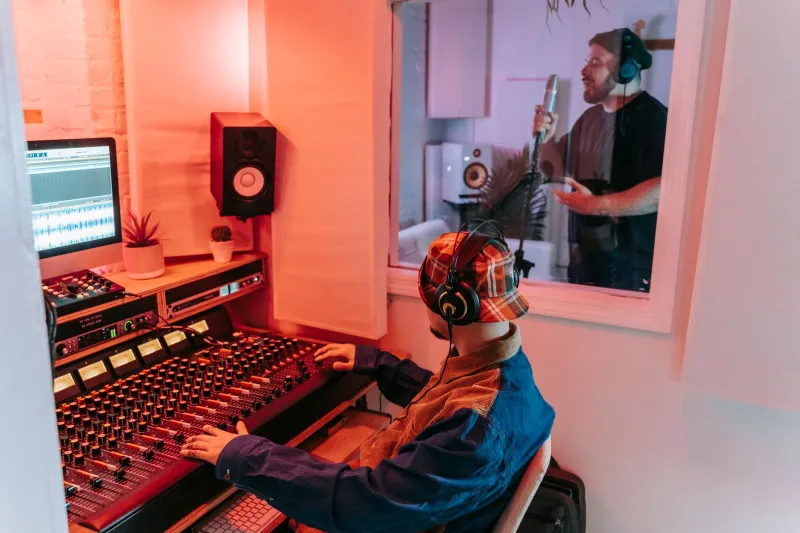
There's a moment — you know the one — when a song drops and the whole room shifts. Conversations stop. Phones come out. Someone yells who made this? And nine times out of ten, the answer they're looking for is the artist's name. But the real answer? It lives in the fine print. It lives in a home studio in Atlanta, a converted bedroom in London, a rented apartment in Lagos where a producer is up at 2 a.m. sculpting the sonic architecture that's about to move millions of people across six continents.
African diaspora producers have been shaping the sound of global pop culture for decades. They've been doing it quietly, methodically, and often without the credit — or the coins — they deserve. But something is shifting. A new generation of sonic architects is stepping into the light, renegotiating their place in the industry, and building structures that don't depend on anyone's permission.
The Credit Gap Is Real — And It's Not an Accident
Let's talk about the elephant in the room. The music industry has a long and well-documented history of obscuring the contributions of Black creators — particularly those working behind the scenes. Producers, co-writers, and engineers from African and Caribbean backgrounds have repeatedly found themselves cut out of credits, locked out of royalty streams, or buried so deep in the liner notes that their names might as well be invisible.
This isn't just historical grievance. It's happening right now. Producers working in Afrobeats, Afropop, and Afrofusion — genres that have exploded into mainstream American consciousness over the last five years — are frequently seeing their beats licensed, sampled, or outright lifted without proper attribution. The global appetite for African-rooted sound has never been bigger. The infrastructure protecting the people who create that sound? Still catching up.
"The genre blows up and suddenly everyone wants a piece of it," says one London-based producer who works across the US and West African markets and asked to remain anonymous. "But the people who built the sound, who were in the trenches before it was cool? We're still negotiating for what we're owed."
Remote Tools Changed the Game — And Diaspora Producers Ran With It
If there's a silver lining to the last few years of industry disruption, it's this: the democratization of production technology has been an equalizer in ways the major labels definitely didn't plan for.
Cloud-based collaboration platforms like Splice, BandLab, and Soundtrap, combined with the near-universal adoption of remote session work post-pandemic, have allowed diaspora producers to build genuinely global workflows without relocating to New York or LA. A producer in Houston can be co-producing a record with a vocalist in Accra and a mixing engineer in Toronto — in real time, across time zones, without a label middleman in the room.
This matters more than it might seem. Physical proximity to industry hubs used to be a prerequisite for breaking through. That geography created natural gatekeeping — who you knew, what rooms you could get into, whether you could afford to live in a city where rent eats your entire publishing advance. Remote production has quietly dismantled some of those walls, and diaspora creators have been among the fastest to adapt.
Collectives like Sarz Academy, which has trained hundreds of producers across Africa and the diaspora, or the growing network of Black-led production houses operating out of cities like Atlanta, Houston, and Toronto, are proof that the ecosystem is organizing itself. These aren't just creative communities — they're economic units, pooling resources, sharing knowledge, and negotiating collectively in ways that individual producers rarely could.
Building Collectives as a Form of Self-Defense
The collective model isn't just about efficiency. It's a strategic response to an industry that has historically isolated Black creators to exploit them more easily.
When producers work alone, they're vulnerable — to predatory contracts, to credit disputes, to the kind of casual erasure that happens when a label decides a song's success belongs entirely to the artist on the cover. When they organize, the calculus changes. Collectives can afford legal counsel. They can standardize contracts. They can walk away from deals that don't serve their members, because there's a whole network behind them.
Production collectives rooted in the African diaspora are increasingly operating like independent labels without the artist roster — handling licensing, publishing administration, sync placement, and even brand partnerships on behalf of their producer members. Some are going further, launching imprints and signing artists directly, cutting out the traditional label structure altogether.
The model isn't perfect. Internal equity disputes, creative differences, and the eternal question of who gets top billing on a shared project can fracture even the most well-intentioned collective. But the alternative — going it alone in an industry designed to extract maximum value from independent creators — is worse.
Sound Design as Cultural Assertion
Here's what often gets lost in conversations about production credits and royalties: the music itself. The specific, irreducible cultural knowledge embedded in the work that diaspora producers bring to every session.
The way a Lagos-raised producer layers percussion is not just a technical choice — it's a cultural inheritance. The way a Jamaican-American engineer hears low-end frequencies, the way a Ghanaian-British sound designer approaches melodic structure — these are forms of knowledge that took generations to develop, that were carried across oceans and through displacement, and that now form the sonic backbone of music that billions of people consume every day.
When that knowledge is extracted without credit, without compensation, without acknowledgment, it's not just a business dispute. It's a continuation of a much older pattern of taking from Black creators while erasing their names from the story.
The producers who are pushing back — demanding co-producer credits, registering their works with PROs like ASCAP and BMI, building relationships with music attorneys who specialize in publishing disputes — are doing something that goes beyond protecting their individual income. They're asserting that the culture has a source, and that source deserves to be named.
What Comes Next
The conversation around producer rights is getting louder, and diaspora voices are at the center of it. Organizations like the Black Music Action Coalition and the Annenberg Inclusion Initiative have been pushing major labels on equity issues for years. Artists with massive platforms — from Burna Boy to Beyoncé — have used their visibility to spotlight the producers and collaborators behind their work. And a growing wave of music journalism, including right here at The Afropole, is committed to making sure the people in the back of the room get their flowers.
But structural change requires more than visibility. It requires contracts that actually protect producers from the jump. It requires labels and streaming platforms to take publishing attribution seriously. It requires the industry to stop treating production credits as an afterthought and start recognizing them as the intellectual property they legally and ethically are.
The beats are already running the world. It's time the people who make them got to run something too.