The Circle Is the Studio: How Diaspora Cipher Culture Is Rewriting the Rules of Who Gets to Make Music

Something happens when the circle forms. Somebody starts a beat — maybe off a Bluetooth speaker, maybe just from their mouth — and the energy shifts. Shoulders drop. Eyes sharpen. And then someone steps in.
That's the cipher. And if you've been sleeping on it, you've been missing one of the most important creative revolutions happening in Black music right now.
Across the US, what used to be seen as a street corner warm-up or a park jam throwback is quietly transforming into something far more serious. Diaspora artists — from West African immigrants spitting bars in Twi over Afrobeats instrumentals to second-gen Caribbean MCs blending patois with drill cadences — are turning cipher culture into their primary creative infrastructure. No label. No A&R. No permission.
Just the circle.
From Tradition to Infrastructure
The cipher has deep roots. In African American and Hip-Hop culture, it's always been a proving ground — a space where skill gets tested and community gets built simultaneously. But what's different now is the intentionality behind it.
Organizers across major US cities aren't just hosting ciphers for the love of it. They're curating them. Documenting them. Turning them into pipelines.
Take Chicago's Southside Cipher Collective, which started as a monthly meetup in a parking lot off 79th Street and has grown into a bi-weekly event that draws over 200 people, complete with mobile recording setups and a rotating roster of producers who offer on-the-spot beat selection. Founder and organizer Dami Osei — who immigrated from Ghana with his family at age nine and grew up absorbing both Chicago drill culture and highlife music from his parents' record collection — describes what the space has become as "a whole industry in miniature."
"We've had artists come through the cipher and leave with a fully recorded verse, a producer contact, and a visual clip that went viral the same night," Osei says. "That used to take a year and a label deal. Now it takes a Tuesday."
The Diaspora Ingredient
What makes these modern cipher spaces distinct isn't just the technology or the organization — it's who's showing up and what they're bringing with them.
The African diaspora has added a completely new sonic and cultural layer to cipher culture. In Houston's Third Ward, a cipher community called Afro Frequency has built a reputation for blending Hip-Hop freestyle traditions with Afropop and Afrobeats rhythms. Artists step into the circle switching between English, Yoruba, and Pidgin mid-bar, and the crowd doesn't flinch — they go harder.
Organizer and rapper Amara Diallo, who was born in Conakry and raised in Houston, says the space was born out of frustration with existing music scenes that treated African-influenced sounds as a novelty rather than a foundation.
"When I first started going to open mics, I felt like I had to choose — be the African artist or be the Houston rapper," she says. "The cipher gave me a place where I didn't have to choose. I could be everything at once. And now I'm watching younger artists do the same thing, but even more fearlessly."
That fearlessness is producing music that sounds like nothing the mainstream has fully caught up to yet — and that's exactly the point.
No Gatekeeper, No Problem
The traditional music industry pathway is well-documented and well-worn: hustle for a demo, land a meeting, get signed, get shelved, or get lucky. Diaspora artists — many of whom already navigate systems that weren't built for them — have been particularly quick to recognize that the cipher offers something the industry fundamentally can't: unconditional access.
In Atlanta, a collective called Kente Cipher has turned their weekly sessions into a full creative ecosystem. They run a SoundCloud page where cipher recordings get uploaded within 48 hours. They have a network of videographers who rotate through sessions capturing content. And they've built a Discord community of over 3,000 members where artists share feedback, collaborate on beats, and organize collab sessions remotely.
"We function like a label without the label part," says co-founder Kweku Mensah, a Ghanaian-American producer and MC who has been running the collective for three years. "We've got distribution, we've got marketing, we've got A&R — it's just all done by the community, for the community."
Several artists who came through Kente Cipher have gone on to land sync deals, brand partnerships, and tour slots — none of them through traditional label pipelines.
New York Still Holds It Down
If the cipher has a spiritual home, it's New York. And the city's diaspora communities have kept that flame burning while also expanding what the cipher can be.
In the Bronx — where Hip-Hop was literally born — a new generation of cipher organizers are running sessions that feel part block party, part recording session, part cultural archive. The Bronx Diaspora Cipher, organized by Haitian-American artist and activist Céleste Augustin, specifically centers women and non-binary artists from diaspora backgrounds, creating space that has historically been harder to access within cipher culture.
"The cipher has always been powerful, but it hasn't always been equally accessible," Augustin says. "We're fixing that. And what's coming out of these sessions is some of the most innovative music being made in New York right now."
The sessions are recorded and archived as part of an ongoing oral history project, with Augustin framing the work as cultural documentation as much as music-making.
"A hundred years from now, people are going to want to know what this moment sounded like. We're making sure they can hear it."
The Studio Didn't Build Hip-Hop — The Street Did
There's a tendency in mainstream music conversation to treat the recording studio as the only legitimate site of music creation. But cipher culture has always pushed back on that idea, and the diaspora artists leading these spaces are doing it more explicitly than ever.
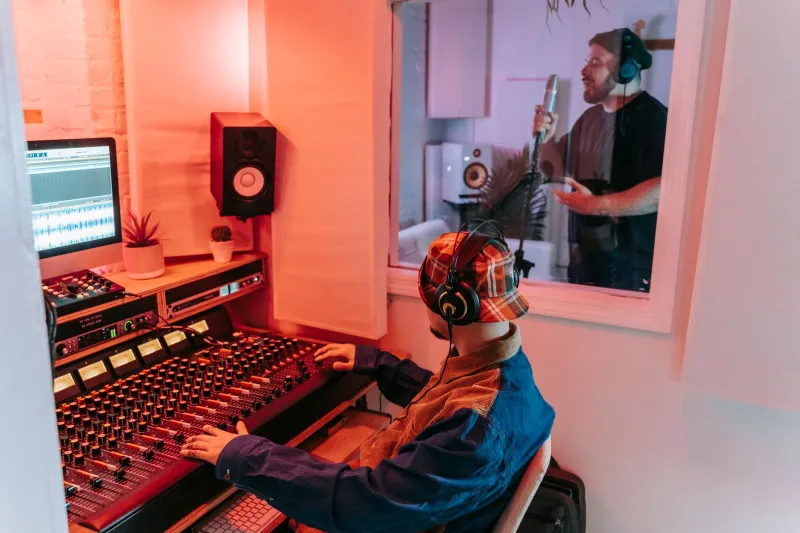
The music coming out of these circles is raw, yes — but it's also collaborative in ways that studio sessions rarely are. Ideas get pressure-tested in real time. A bar that lands gets built on immediately. A concept that doesn't resonate gets left behind before it ever gets recorded. It's iterative in a way that mirrors how African musical traditions have always worked — communal, responsive, alive.
And increasingly, the industry is paying attention. Labels have started sending scouts to major cipher events. Playlist curators follow the SoundCloud pages. But the artists and organizers leading these spaces are largely unbothered by the attention — because they've already figured out that the circle doesn't need the industry's validation to be real.
"The cipher was always the studio," Dami Osei says, laughing. "We just finally stopped pretending otherwise."
The circle is open. Step in.