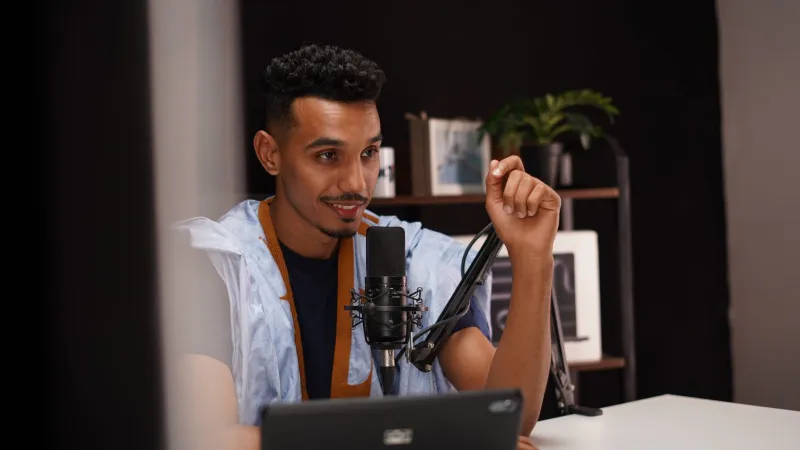
Sweat, Soul & Self-Worth: How Black Fitness Creators Are Redefining What It Means to Move

Photo by Photo by Stacy Ropati on Unsplash on Unsplash
For a long time, fitness culture in America had a very specific look. Thin. White. Aspirational in the most exhausting, colonial sense of the word. The gym was a place you went to become something else — something smaller, something more palatable, something closer to a standard that was never designed with you in mind.
But something is shifting. Loudly, beautifully, and with a whole lot of sweat.
Across the country, Black and African diaspora fitness creators are dismantling that tired framework one workout at a time. Pole dancers, track athletes, yoga instructors, dance fitness coaches — they're not just exercising. They're reclaiming movement as a form of self-love, community care, and ancestral connection. And they're doing it in spaces that, honestly, weren't exactly rolling out the welcome mat.
The Body as Archive
Let's start here: movement has always been political for Black people in America. From the ring shouts of enslaved communities to the stepping traditions of Black Greek life, the body has always been a site of resistance, memory, and joy. That context doesn't disappear when you walk into a fitness class. It just gets ignored — or worse, appropriated.
Diaspora fitness creators are refusing that erasure. They're building practices that acknowledge the full history of Black bodies in motion. That means centering joy over punishment, strength over shrinkage, and community over competition.
Take the pole fitness community, which has seen an extraordinary surge of Black women and femmes leading the charge in studios from Houston to Harlem. Pole dancing — long stigmatized, recently gentrified — is being reclaimed as a practice of radical body autonomy. Black instructors are creating studio environments where size, ability, and background don't determine who gets to feel powerful. The pole, they'll tell you, doesn't lie. It meets you exactly where you are.
Afro-Wellness Isn't a Trend — It's a Return
One of the most exciting things happening in diaspora fitness right now is the intentional weaving of African and Caribbean movement traditions into modern wellness practice. This isn't fusion for the sake of a cute Instagram aesthetic. It's restoration.
African dance forms — Sabar, Kizomba, Afrobeats-inspired cardio — are showing up in fitness spaces not as exotic add-ons but as the main event. Instructors rooted in West African and Afro-Caribbean traditions are building classes that feel less like punishment and more like celebration. Your heart rate goes up, sure. But so does your spirit.
Yoga is getting the same treatment. Black yoga teachers across the US have been vocal about how traditional American yoga spaces can feel alienating — the aesthetics, the music, the unspoken cultural codes. In response, communities like Yoga for the People (before its complicated ending) and a new wave of independent Black-led studios have built practices that speak directly to diaspora experiences. Breathwork that acknowledges grief. Flows designed for bodies that carry generational stress. Rest as a radical act.
This is what it looks like when wellness stops being a product and starts being a practice rooted in actual people.
Track, Field & Fighting for Space
Elite athletics is its own conversation. Black athletes have always dominated track and field, basketball, football — and have always had to fight to be seen as fully human within those spaces. The wellness industrial complex has been slower to reckon with that contradiction.
But diaspora athletes are creating their own lanes. Running clubs with explicit Black community focus — like Black Men Run chapters popping up in cities nationwide, or women-led groups like GirlTrek, which frames walking as a civil rights issue — are reframing exercise as collective care rather than individual performance. These aren't just workout groups. They're accountability communities, mental health spaces, and cultural touchstones all at once.
The message is consistent wherever you look: your body doesn't need to earn its right to move. It was built for this.
Building the Wellness World We Actually Deserve
What makes this moment feel different from previous wellness "inclusivity" waves is that diaspora creators aren't waiting for mainstream fitness culture to catch up. They're building parallel infrastructure — and it's thriving.
Black-owned fitness studios are expanding their footprints. Diaspora wellness creators on social media are amassing communities in the hundreds of thousands, offering everything from free workout content to deeply personal conversations about body image, chronic illness, and the specific exhaustion of moving through the world in a Black body. Platforms like YouTube and TikTok have become democratizing forces, letting creators bypass the gatekeeping of traditional fitness media entirely.
And the content isn't just instructional — it's relational. These creators talk about rest. They talk about the days when you can't get off the couch because the world is too heavy. They talk about how diet culture has disproportionately harmed Black women and girls. They make space for the full complexity of what it means to try to take care of yourself when the systems around you are actively working against that.
That kind of honesty builds real community. And real community builds something that no wellness brand can manufacture: trust.
Joy Is the Workout
If there's one thing that ties all of these movements together, it's joy. Not the performative joy of a fitness brand commercial, but the genuine, sweaty, sometimes ugly, often communal joy of moving your body because it feels good — not because you're punishing it into submission.
Diaspora fitness creators are insisting that Black people are allowed to experience pleasure in their bodies. That's a more radical statement than it sounds in a culture that has historically treated Black bodies as things to be controlled, commodified, or corrected.
When a Black woman learns a new pole trick and screams with delight, that's political. When a group of Black men runs through their city at sunrise and holds each other accountable for showing up, that's political. When a yoga instructor leads a class through a breathwork session that explicitly names racial trauma, that's political.
And when all of it is rooted in ancestral memory — in the understanding that Black people have always found ways to move, celebrate, and survive — it becomes something even bigger than politics. It becomes culture.
The diaspora has always known how to move. Now, it's teaching the world what movement is actually for.