Coins, Culture & Community: How Black Financial Creators Are Finally Making Wealth Talk Feel Like Home
For a lot of us, the first time we heard the word "portfolio" it wasn't from a financial advisor or a college professor. It was from a cousin at a cookout, a Twitter thread at 2 a.m., or a YouTube video from someone who looked like us and talked like us and actually seemed to give a damn. That shift — from exclusion to education on our own terms — is the story behind one of the most quietly powerful movements happening in the Black diaspora right now.
Black financial literacy creators are having a moment. And not a fleeting, trend-cycle kind of moment. We're talking about a full-on cultural reorientation around money, wealth, and economic self-determination — one that's being driven by a community that has been historically locked out, underpaid, and underserved by the very institutions that were supposed to help them thrive.
The Gap That Built a Movement
Let's be real about where this comes from. Black Americans have faced centuries of deliberate economic exclusion — from the destruction of Black Wall Street in Tulsa to redlining policies that kept entire generations from building home equity, to predatory lending practices that gutted Black wealth during the 2008 financial crisis. Traditional financial institutions have not exactly been allies in this story.
So when Black creators started showing up online to explain index funds in plain English, break down the difference between a Roth IRA and a traditional IRA using pop culture references, or walk their followers through their own first real estate investment — people paid attention. Because this wasn't the stiff, jargon-heavy content that made most folks feel like finance was someone else's game. This was the community talking to itself, and it hit different.
Creators like Tiffany Aliche, known as "The Budgetnista," and Berna Anat, who goes by "Financial Feminist," helped lay the groundwork. But now there's an entire ecosystem — across Instagram, TikTok, YouTube, and Substack — of diaspora voices breaking down everything from building an emergency fund on a tight budget to navigating the complexities of investing as a first-generation American whose family may still be sending remittances back home.
It's Not Just Content — It's Cultural Reclamation
What separates this wave of financial creators from the generic "money tips" content cluttering every corner of the internet is the cultural specificity. These creators understand that Black financial life in America doesn't exist in a vacuum. It exists within a particular set of pressures, obligations, and values that most mainstream financial advice completely ignores.
There's the reality of being the first in your family to navigate investing while also being the one everyone calls when the rent is short. There's the weight of wanting to honor communal giving traditions rooted in African and Caribbean culture — susus, partner hands, family pooling — while also building individual financial security. There's the distrust of banks that is, frankly, earned and historical.
Creators who get this don't just talk about maximizing your 401(k). They talk about how to have the money conversation with your parents. They talk about setting financial boundaries without guilt. They talk about building wealth in a way that doesn't require you to abandon your community or pretend your circumstances are the same as someone who inherited a down payment.
That resonance is everything. When a creator says, "I know some of y'all are supporting your whole family on one income, so let's talk about what's actually realistic" — that's not just financial advice. That's somebody seeing you.
The Platforms Are the Pulpit
TikTok has become an unlikely classroom for a generation of Black investors. Short-form videos breaking down compound interest, explaining what it means to "buy the dip," or demystifying the stock market have racked up millions of views — not because they're flashy, but because they're accessible. The comment sections on these videos often read like a community meeting, full of questions, follow-ups, and people tagging their siblings and cousins.
Substack newsletters have carved out space for deeper dives — long-form pieces on generational wealth strategy, diaspora-specific financial planning, and the intersection of politics and personal finance. Podcast networks are producing shows where Black financial experts talk to each other and to their audiences without the sanitizing filter of mainstream financial media.
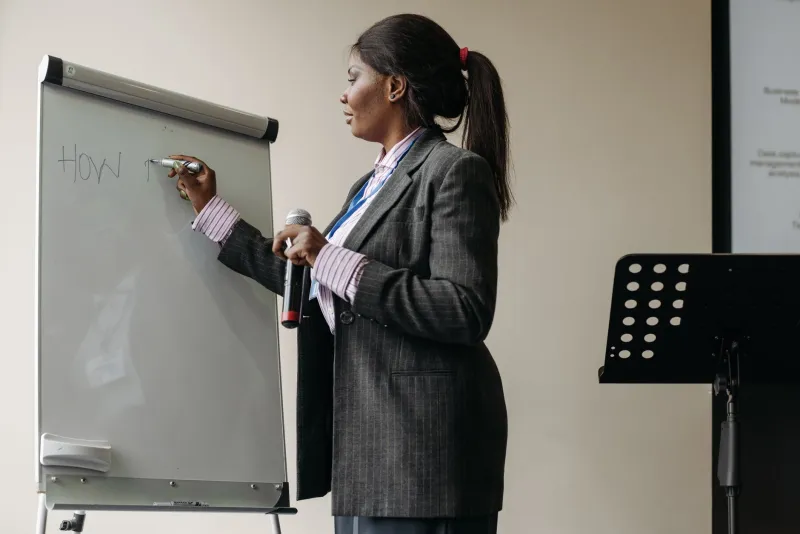
And then there's the live event space. Financial empowerment workshops organized by and for Black communities are popping up in cities across the country — Atlanta, Chicago, Houston, D.C., New York — bringing creators off the screen and into rooms where real conversation can happen. These aren't dry seminars. They feel more like revival meetings, with the energy of people who know they're in the middle of something meaningful.
Reinvesting in the Community
One of the most compelling threads running through this movement is the emphasis on collective wealth — not just individual financial gain. Many creators are actively pointing their audiences toward Black-owned banks, credit unions, and investment groups. They're highlighting initiatives like community investment funds and encouraging their followers to think about where their dollars circulate, not just how many they accumulate.
This isn't anti-capitalism. It's a more intentional, community-rooted version of it — one that asks what wealth actually means for people who've been told for generations that it isn't for them. The answer, increasingly, is that it means something beyond a personal brokerage account. It means building institutions, funding the next generation, and creating the kind of economic infrastructure that makes a community resilient over time.
The susu is getting a digital upgrade. Investment clubs are forming online. Crowdfunded real estate platforms are being passed around group chats. The old communal financial wisdom that African and Caribbean diaspora communities have always carried is being translated into new contexts — and it's working.
The Work Is Far From Over
None of this is to say the structural barriers have disappeared. The racial wealth gap in America remains staggering, and no amount of TikTok content is going to fix a system that was designed to extract from Black communities rather than invest in them. Policy change, reparative action, and institutional accountability are still absolutely necessary pieces of this puzzle.
But what's happening in this creator space is something real and worth celebrating. It's a generation refusing to wait for permission or for the system to fix itself. It's people building knowledge-sharing networks, mutual aid frameworks, and financial fluency in communities where that fluency was deliberately suppressed.
The Afropole has always been about where the diaspora moves, creates, and connects. And right now, some of the most important creating happening is the creation of wealth — not just for individuals, but for a community that has every right to it and has been doing the work to claim it on its own terms.
The money talk is finally sounding like home. And that changes everything.